In most engineering textbooks, the user is sitting in a coffee shop with stable 5G and the latest iPhone. But if you are building for the African market, that user is a myth.
The reality? It’s a merchant in a bustling market with patchy 3G. It’s a student using a three-year-old Android device with limited RAM. It’s a father trying to pay a hospital bill while his data bundle is about to expire.
Building for perfect conditions isn’t just optimistic, it’s bad business.
The Invisible Failure: The Silent Stall
In a perfect world, if a transaction fails, you get an error code. In the African reality, you get a Silent Stall.
This is when the backend says Success, but the user’s phone has frozen on a loading spinner because the network dropped mid-handshake. To your server, everything is fine. To your user, your app is broken. They don’t send a support ticket, they just close the app and go to your competitor.
Connectivity is a Gradient, Not a Toggle
We often talk about being online or offline, but the African experience exists in the gray area between.
- High Latency: The request sent, but the response is taking forever.
- Packet Loss: Half the data arrived, but the UI doesn’t know how to render it.
- Device Thermal Throttling: The phone is hot, the processor slowed down, and your heavy animations just crashed the browser.
Bridging the Visibility Gap with Cuoral
This is where traditional monitoring fails. Standard tools tell you your server is up. They don’t tell you your user is frustrated.
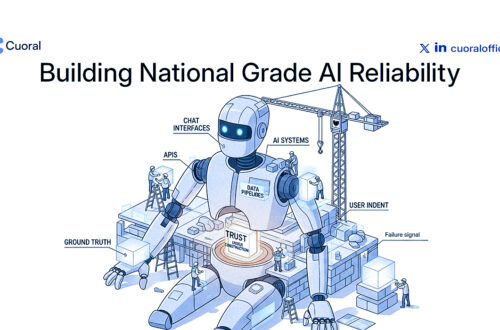
At Cuoral, we believe you can’t fix what you can’t see. We provide what we call Technical Ground Truth. Instead of guessing why a user dropped off during a checkout flow, Cuoral gives you session-level forensics.
We show you exactly what happened on that specific device, on that specific network, at that specific moment.
- Did the UI freeze because of a memory leak?
- Did the payment gateway stall because of a 3DS redirect failure on a mobile browser?
- Was it a genuine network drop or a bug in your retry logic?
The Future of African Product Engineering
Building resilient UI/UX means designing for the worst-case and being pleasantly surprised by the best-case. It means using experience intelligence to understand the friction points that logs miss.
When you bridge the gap between backend data and frontend reality, you don’t just build a better app. You build trust. And in our market, trust is the only currency that matters.