The Shift from Cost Center to Growth Engine
For a long time, the C-suite has viewed Customer Experience (CX) through the narrow lens of a cost center. It was a department designed to handle problems, a reactive safety net meant to minimize the damage after a user had already felt the sting of a friction point.
In the traditional model, you hire more agents to answer more tickets, and you buy more fragmented monitoring tools to tell you that, yes, something indeed broke. But in 2026, the companies winning the market are those that realized reliability isn’t a technical metric; it’s a financial one.
The Myth of the Green Status Page
When a user’s bank sync fails in a fintech app or a checkout button becomes unresponsive in a marketplace, that isn’t just a technical glitch. It is a moment of high-intent revenue attempting to exit your ecosystem.
Most organizations rely on Green Status Pages that measure server uptime, but server uptime is a vanity metric if the user is staring at a frozen UI.
If your backend is at 99.9% but your user’s Buy button is unresponsive, your effective reliability for that transaction is 0%.
Recovering Revenue through Proactive Forensics
The shift from a cost center to a growth lever happens the moment you move from reactive support to proactive forensics. When you treat every support ticket not as a task to be closed, but as a data point for revenue recovery, the math changes.
Traditional tools like Sentry or Hotjar give you pieces of the puzzle, but they often leave the CX team acting as a middleman between a frustrated customer and an overworked engineering team.
This context-switching tax is where revenue goes to die. By the time a developer reproduces a bug from a grainy screenshot, the user has already downloaded a competitor’s app.
The Ground Truth of the Digital Black Box
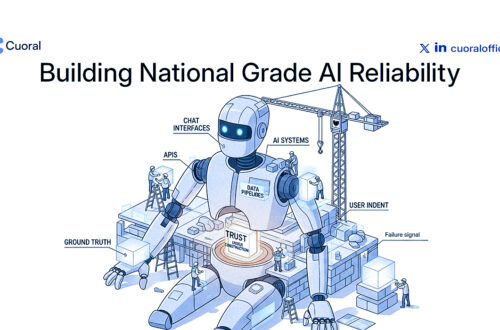
True reliability as a revenue function means having a digital black box for every session. It’s the ability to see the exact technical failure, like the API timeout or the client-side logic error, alongside the human experience in real-time.
When CX teams have this level of ground truth, they stop being ticket takers and start being recovery agents. They can reach out to a user who just experienced a silent crash before that user even thinks about sending a complaint.
That is how you turn a moment of friction into a moment of brand loyalty.
Eliminating Silos for Speed of Insight
Consolidating your stack isn’t just about saving a few hundred dollars on SaaS subscriptions, though that is a welcome side effect. It’s about the speed of insight.
When your error tracking, session replays, and engagement tools live in one unified environment, you eliminate the silos that slow down your response time.
In a world where user patience is at an all-time low, the Mean Time to Resolution (MTTR) is directly correlated to your churn rate.
Measuring What Matters
We need to stop asking if our servers are up and start asking if our revenue is flowing.
When reliability becomes a core pillar of your growth strategy, CX stops being a line item you try to shrink and becomes the most powerful engine for retention you own.
It’s time to close the gap between what your logs say and what your users feel.